Tab 1 title
Tab 1 content
Tab 2 title
Tab 2 content
Tab 3 title
Tab 3 content
|
Name Place (Wormwood): About the name of Agria have shown different views. Predominately are four. One wants the name of Agria come from the plant Agria(-iados ), the other of wild olives arriving until then on the beach (Oleaster- Agrilia after Agria) and the other by the expression of solicitation fishermen '. Prevalent is the view expressed by Lechonitis Scholar Patroclus Palamidas that the name came from the church that existed in ancient times and was dedicated to Artemis Agra. The linguistic evolution of Agra in Agria is particularly believable(such as oils – olive, Graia – old and Agra – Wormwood), Throwback: Agria extends along the beach Pagassitikos about six miles southeast of Volos and is the nearest suburb. Is relatively new town(became the community 1912). The area formerly belonged to dragons and St. Lawrence which was a seaport from which these and other villages traded agricultural and handicraft products. Initially there were only small huts where the people of dragons and Saint. Lawrence went down in the winter to harvest their olives. During the Turkish Agria, there was a settlement. However, the first houses were built in the early 19th century before the Revolution 1821. A note joke and very interesting to Agria says : "Agria was under Turkish rule simple customs and military station '. Since 1809 – 1860 creating a business and export trade craft and cooperage with good organization that helped a little time the Pelion products spread in Western Europe, Romania and Russia. Agria began to grow rapidly after the annexation of Thessaly, construction of coastal road and rail later, who linked Volos with the villages of southwestern Pelion, thus exported by sea export trade black oils and fruit from the bay. Τον 20 Agria century saw population and industrial development. The famous factory founded in EPSA 1924 by brothers Kosmadopouloi bank owners to build refrigerated fruit and ice plant. Overproduction of the region lemons and already developed movement of traditional lemonade from Asia Minor sellers, leading owners in recruiting German engineers to operate bottling plant beverage. According to legend, the German engineer has discovered a rare recipe for producing lemonade, recipe still used today and is invariant stock company. Other local businesses were founded and flourished then as the plant I.Matsango involved in processing, packaging and marketing of olives, the woodworking craft was originally built drums and modernizing industry turned into woodworking and furniture while. Also other smaller companies-mainly oil depots – began to operate and attract people to the Municipality of Agria. It 1999 with Kapodistrias plan a new municipality was established and includes the towns Agria and dragons, which were hitherto separate communities.
The Municipality of Agria is now a traditional village with a population of around 6.500 people. Name Place (Drakeia):The origin of the name Drakeia have been many opinions:
Throwback:The Drakeia, Pelion village with a long history, situated in an idyllic location amidst orchards of fruit trees. feature of the village are the houses with stone roofs. Located at an altitude 500 meters and is 17.5 km from Volos and 10km from Agria.'s built-to-point , probably from fear of pirates. The village is located NE of Volos, with closer to sunrise, not just NE of Agria, north of Lower Lehonia. Is northwest Portaria, southeast Saint Lawrence and beyond what St. George. The latter villages are chain continuity with dragons. The three villages dragons, St.George, Saint Lawrence, with the Upper and Lower Lechonia Lechonia, Agria and St. Blaise, once again united the large municipality Nileias. The Drakeia founded in the 15th century as the investigation reaches of the monastic codes that have survived to our days. The first settlers had come from the mainland and most of them were masons. From them they learned the art of bricklaying many who had come upon the village so the Drakeia be known for many good craftsmen. In the early 18th century, the inhabitants of Drakia developed crafts and barter trade. Was also among the first (together with the residents of Ag.Lafrentiou) began to cultivate potatoes in Pelion. Even the Drakeia was known for growing vines and silk. Most villagers engaged in the cultivation of olive trees and apples and some others of wood. Drakeia In older mills were used to grind wheat. Moreover was the first place throughout the village Pelion has acquired electricity. This was done through the help of Gouda, who donated an entire power plant. The Drakeia featured as one of the controls without Greece. On 17 December 1943 the Germans invaded Drakeia, entered the main village cafe, where were gathered most men in the village whom they arrested and closed there. At dawn on December 18 took them in groups in the adjacent river villages and executed. The Drakeia then lamented 118 victims. At this point, the village is the war memorial. |
| Mayor:Thomas PapaefthimiouAldermen: Zachos Charalambos,Dimitris Karadaku
Town council: The City Council consists of the following 17 members. Usually meets once a month and makes decisions on various issues facing the municipality. Local Council: The local council is composed of 5 members and promotes the problems of settlement Drakia City Council to resolve.
Municipal Committee: |
||||||||||||||||||||||||||||||||||||||||||||||||||||||||||||||||||||||||
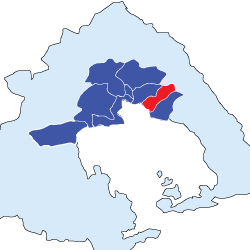
The local unit (former municipality) Agria occupies an area 25,2 sq.km.. and has a total population 6.112 residents. Located on the slopes of Pelion, north of the agglomeration of Volos which is.
The former municipality functioned from 1999 to 2010 based Agria.
Includes the following local communities and settlements:
Community Agria - The wild [ 5.229 residents ]
Community Drakia [ 883 residents]
The Drakeia [ 575 ]
The Anemoutsa [ 31 ]
Hania [ 277 ]